The digital transformation of the AECO sector is often associated with new tools, platforms and methodologies: BIM, common data environments, automation, artificial intelligence or digital twins. But digitalising an organisation involves more than simply introducing technology. It also forces us to ask ourselves how we work, how we share information, how we distribute responsibilities and how we make decisions.
At Coloma+Armengol, we have long understood BIM from this perspective. Not simply as a technological tool, but as a methodology that changes processes and the ways in which the different stakeholders involved in a project collaborate. In fact, BIM implementation brings with it new responsibilities and skills related to the creation, use and management of information.
This perspective has recently led us to explore another area: TEAL organisations.
What Are TEAL Organisations?
The concept of the TEAL organisation, popularised by Frédéric Laloux, proposes organisational models that evolve towards less hierarchical structures and are based primarily on three principles: self-management, wholeness and evolutionary purpose.
It is not simply about removing hierarchies or applying a specific organisational formula. The question is how decision-making capacity is distributed, how trust is built within teams and how an organisation can continuously adapt to its environment.
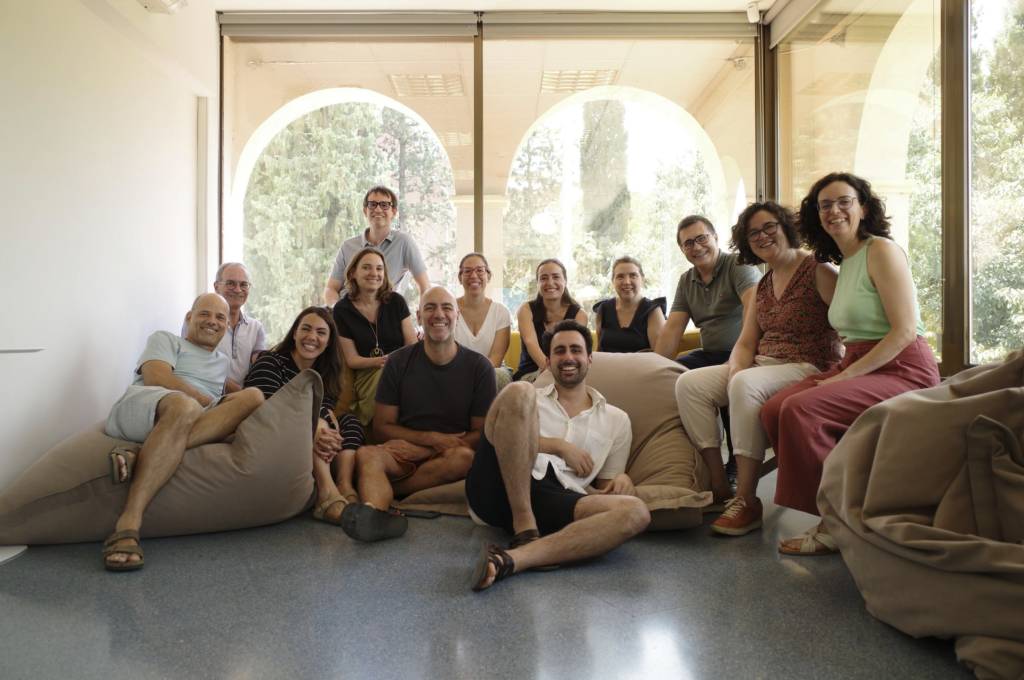
This summer, several members of Coloma+Armengol took part in the Vermuts TEAL Barcelona sessions, an initiative developed in collaboration with Vector5 | excel·lència i sostenibilitat, Barcelona Activa and Full Circle Team.
During the sessions, we had the opportunity to discuss and reflect on organisational paradigms, power structures, leadership, participation, care, transparency, reciprocity, sustainability and ways of working that are more consistent with organisational values.
And an inevitable question emerged.
Are TEAL Organisations Better Suited to BIM Working Environments?
BIM is based on an apparently simple idea, but one with significant implications: different stakeholders must be able to generate, coordinate and use information collaboratively.
At C+A, we understand BIM as a set of tools, techniques and concepts based on coordinated, coherent, computable and continuous information, aimed at facilitating coordination between the different participants in the construction process.
And this need for collaboration remains central today. C+A’s work is focused precisely on the digital transformation of the construction sector, providing consulting, training, BIM implementation and project management services.
Technology Needs an Organisation That Supports It
This is where we see a potential connection between BIM and TEAL principles.
A project may have a perfectly structured BIM model, a common data environment and clearly defined protocols. But if decision-making remains concentrated, information does not flow properly or teams do not have sufficient autonomy to act on that information, part of the potential of digital transformation remains limited.
That is why we are interested in exploring questions such as:
- How can we distribute responsibility more effectively within teams?
- What level of autonomy do people need to truly make use of the information available?
- How can we combine structured processes with the ability to adapt?
- What role should trust, transparency and shared purpose play in BIM implementation?
We do not have a definitive answer. And perhaps looking for one would not be particularly useful.
From Transforming Tools to Transforming Organisations
One of the ideas we take away from the Vermuts TEAL sessions is that organisational transformation cannot be completely separated from digital transformation.
BIM has already required us to reconsider workflows, responsibilities and information management processes. The evolution of BIM roles itself demonstrates that implementing this methodology affects the strategic, tactical and operational levels of organisations.
Perhaps the next step is to ask ourselves not only what technology our organisations need, but also what kind of organisation we need in order to truly take advantage of that technology.
A Conversation We Want to Continue
At Coloma+Armengol, we want to continue exploring the relationship between digital innovation, BIM and organisational transformation. Not because we consider the TEAL model to be a universal solution, but because it raises questions that are particularly relevant for a sector in which collaboration, interoperability and adaptability are becoming increasingly important.
Technology can change our processes. But for transformation to be real, we may also need to evolve the way we organise ourselves around those processes.
Do you think the principles of TEAL organisations fit the way of working that the AECO sector needs?